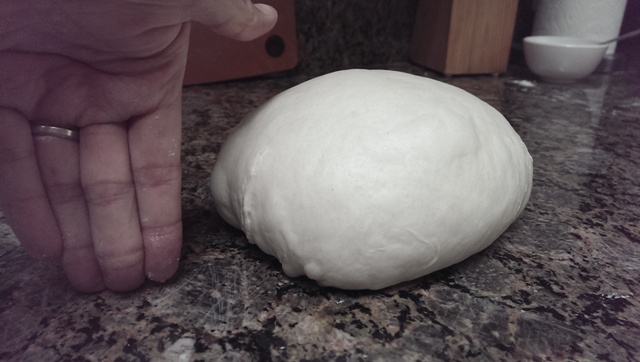
100% Whole wheat bread

Since I’m starting to feel more comfortable with bread making, I decided I should try my hand at making something that is a little healthier.  We had switched from buying bread to me making tortillas for wraps for our lunches (less dense, less calories).  Somewhere along the way I started to get interested in making bread and I want to try to keep this new hobby as healthy as possible.  I most definitely will not stop making other white breads and such, just thought I should try to do some healthy breads.

Poolish

  • 100% Whole wheat bread – 240 g
  • Water – 240 g
  • Instant yeast – 2 g

Remaining formula

  • 100% Whole wheat bread – 480 g
  • Water – 480 g
  • Olive oil – 50 g
  • Honey – 75 g
  • Instant yeast – 3 g
  • Salt – 3 tsp

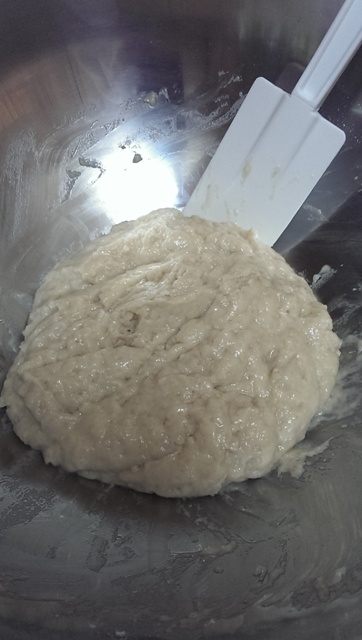
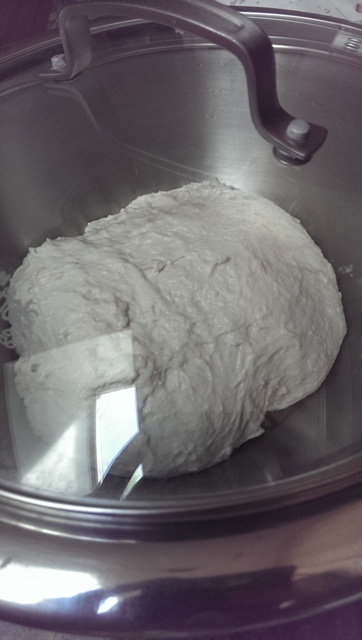
I must have done something wrong with my conversions because this created an almost 100% hydration dough.  And it all just went downhill from there.

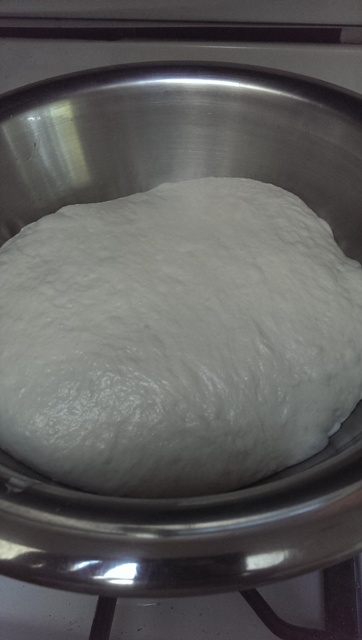
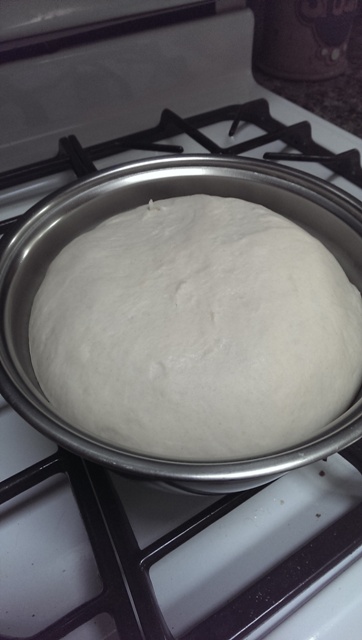
The poolish came out fine as above.  However, I then mixed up the poolish and the above remaining ingredients.  As I was doing this, I was thinking to myself that this hydration was a bit high.  I let the dough do its normal rest and then did the stretch and fold method for 3 minutes, then let it rest.  I repeated the stretch and fold method at 25 minute intervals but the dough just did not seem to be coming together, it remained a very moist and weak structure.

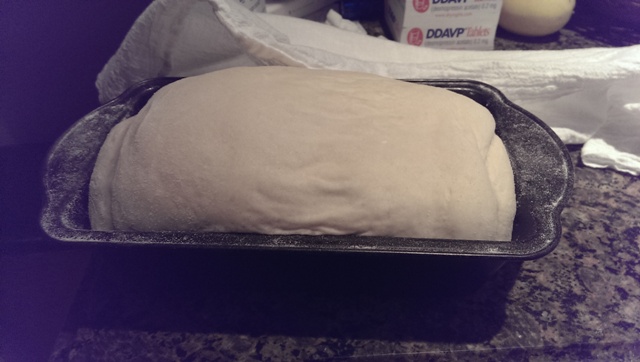
I finally gave up on it developing any sort of strength and form.  I elected to throw it into my breadpan and see what would happen.  As expected, it didn’t turn out great.  There was no good proofing and oven spring and it came out as an inedible brick.

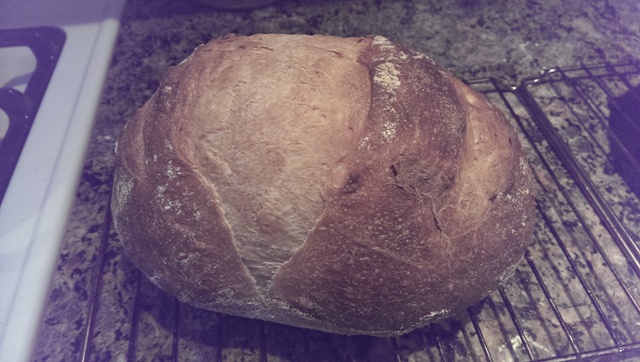
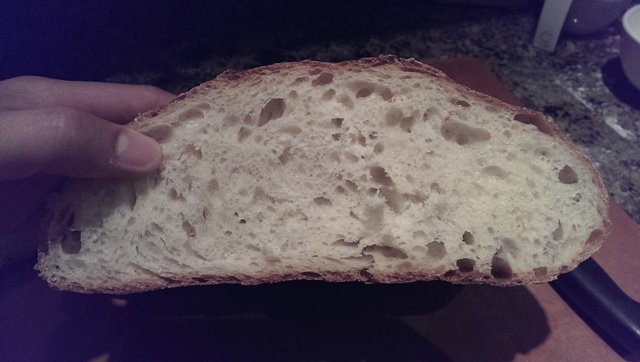
The above happened on Saturday.  I worked Sunday and so to make myself feel better I whipped up a quick white bread boule (I did add a little whole wheat flour into it).

This bread had the following formula:

Poolish

  • 170 g bread flour
  • 170 g water
  • 1/4 tsp (2g) instant yeast

Remaining mixture

  • 100 g bread flour + 30 g whole wheat flour
  • 180 g water
  • 10 g salt
  • 3 g instant yeast

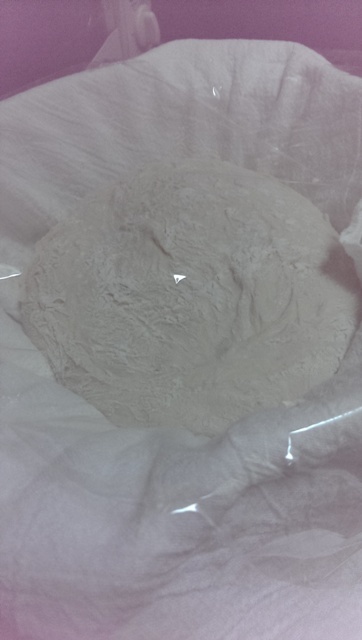
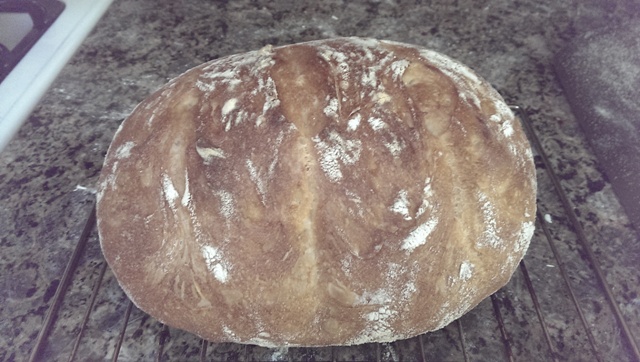
I mixed the poolish (overnight in fridge) with the remaining mixture and then let it sit for 30 minutes to allow some autlyse (let the flour absorb all the water).  I then followed the Richard Bertinet slap and fold.  I feel like I’m getting a better hold of this kneading method as the dough started to form up and come together after only about 10-12 minutes of kneading.  I formed it into a ball and then let it bulk ferment for about 1.5 hours.  It’s been warm here and the bread probably didn’t need to ferment that long but I also needed to fit my long run in so I let it go a little longer.  I did 2 stretch and folds with 10 minutes between them.  By now the dough had developed good gluten and structure.  I was able to form the dough into a nice boule and did the drag method on the counter to create a nicely tensioned top portion of dough.  I then placed it into a well floured cloth in a bowl to let it proof.  After about 1 hour of proofing, I tossed it into my pre-heated dutch oven (450 F) and covered it.  I let it cook for 20 minutes covered then removed the lid and turned the heat to 425 F and let it go another 20 minutes.  By then it had a nice brown crust and I checked its internal temp (~195F).

IMAG2844
Looks good!

Overall I’m happy that I seem to have the basics down.  Now I just need to work some more on the whole wheat stuff.  I think that tweaking the hydration level will probably allow me to create a better product next time.  I should have paid attention that I was creating an essentially 100% hydration dough.

For dinner I also did pizza and I’m getting better at developing pizza dough that isn’t too loose.  I think one problem I’ve been having in the past is that I let the dough go way past what it should (over-proofing).  Before I had just been blindly following someone’s recommendation on the Jim Lahey No-knead but now I actually am listening more to the dough.

-StewsCat

No knead brioche

No knead brioche

Thought I’d try another recipe from the Weekend Bakery.  This time it is their no knead brioche.

Ingredients:

  • 250 g AP flour
  • 100 g butter, melted
  • 70 g water, room temperature
  • 2 eggs (~110 g) – surprisingly I weighed my eggs and they were each 55 g (makes me wonder if they weigh eggs to separate em out into the various sizes they sell in the supermarket)
  • 50 g honey (recipe said runny honey, I just used the honey I squeezed outta my container)
  • 5 g salt
  • 3 g yeast (my scale is a bit finicky so I may have somewhere between 3-4 g in my recipe)

I started by mixing together the eggs, honey, water, salt, and melted butter.  Whisked it for about 30-60 seconds.  Then I added the yeast+flour mixture and mixed it until it was homogenous.

IMAG2731
Mixture prior to resting

Then I let it sit for 2 hours.

I did a stretch and fold 3-4 times.  The dough was fairly well together so I placed the entire thing in a bowl, covered it with plastic wrap, and put it in the fridge for about 48 hours. Now you have the option of dividing the dough into 6 balls to create 1 loaf, or you can do petite brioches.  Since I didn’t have time to let a full loaf proof for 2-3 hours, I decided to make 6 small petite brioches.  So I divided the dough into 6 pieces and formed them into balls.  These were placed in my muffin tin that I greased with butter.

IMAG2748
Prior to proofing

To let it proof, I just tossed the whole tray into my microwave (so I wouldn’t have to fuss with putting something to cover them and possibly getting them to stick).  The site I was basing the recipe off of said to let them proof for 30 minutes.  I found that it took about 50 minutes to proof to my liking.

IMAG2751
After proofing

I had pre-heated my oven to 375F.  I baked it for 7 minutes at this temperature

IMAG2752
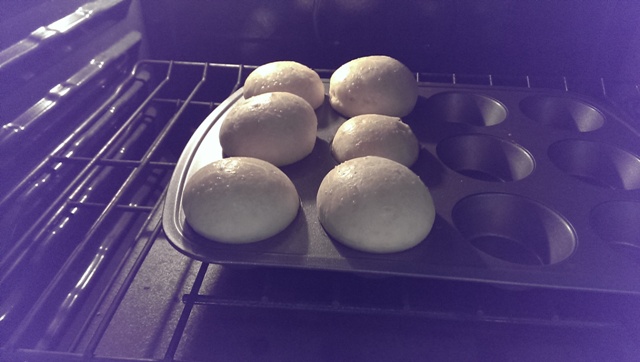
Great oven spring!

Then I dropped the temperature to 320F and kept on going (the site said 8 minutes but they weren’t golden brown at that time so I kept them in).  I probably baked it for a total of about 30-45 minutes.

IMAG2754
Lightly golden brown

I glazed the top with some melted butter and set them on a cooling rack.

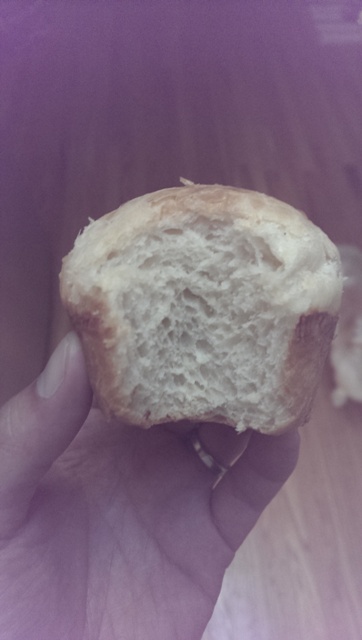
They came out delicious.  Good structure on inside, very buttery.  Wife approved.

IMAG2757
Good crumb structure

YUM!!

-StewsCat


My version of a Baguette Boule

I discovered this great web site: Weekend Bakery that has some wonderful recipes and tips.  So I thought this week I’d try the above bread.

I started with a poolish:

  • 380 g bread flour
  • 304 g room temp water
  • 3 g active dry yeast

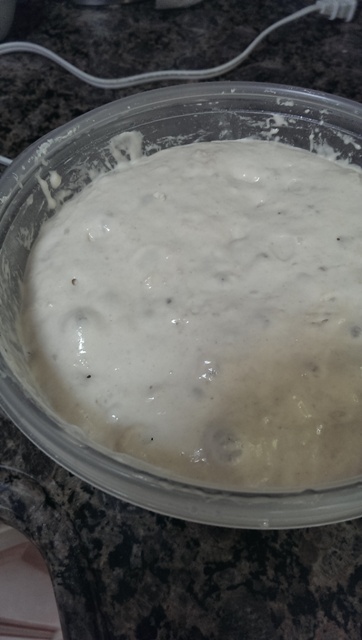
I let the poolish sit at room temperature for 1 hour and then transferred it to the refrigerator for ~13 hours.  The poolish had more than doubled in size overnight.

IMAG2666
Poolish after overnight in fridge

I added the poolish to:

  • 380 g bread flour
  • 266 g water (room temp)
  • 12 g salt
  • 1/4 tsp (~1.5 g) sea salt

I used the 1/4 tsp because my scale doesn’t measure half gram increments so I looked up a conversion.  I know it isn’t exact but neither is baking.  One thing I will need to slowly learn is how to make adjustments to the dough due to weather.  The time of year, temperature, humidity all affect a recipe.  I let the dough rest for 10 minutes covered.

I dumped the dough out onto a floured surface and performed a stretch and fold (envelope style – pulled and stretched dough from east side and folded it 1/3 of way over to west side, pulled from west to east, then north to south and south to north).  I continued repeating this process for 2 minutes then put the dough into a lightly oiled bowl for 45 minutes.

IMAG2669

I repeated the stretch and fold (2 times instead of for 2 minutes) and could tell the dough was really coming together already.

IMAG2670
Coming together

The next 3 stretch and folds would be separated by 45 minutes with just one stretch and fold each time.

IMAG2671
Puffed up and formed

Then I bench rested the dough for 10 minutes.

IMAG2672
After bench rest

I divided the dough into 2 and shaped it (following the technique of folding the dough over, sealing the seams and then doing a tension pull).  There were a large amounts of gas bubbles in the dough and I know that this isn’t good for bread so I ended up popping the large bubbles as best I could.  Since I have not yet invested in bannetons, I lined some bowls with lint-free floured cloths.  I decided to try 2 different methods of baking — with dutch oven and on a pizza stone.  Since I couldn’t bake them side by side, I put one of the boules into a fridge.  While I was doing all this bread prepping, I also had to replace a PVC line running to the raised vegetable gardens.  This required me to take a few trips to home depot (since of course you can’t just go once).  The problem was that I started the pre-heat later than i would have liked for the proper proofing.  The oven was preheated at 455 F wtih the dutch oven.  I lucked out and the proofing was just about right for the bread to go in.  I don’t have a super sharp knife so when I went to score it, I messed up the top of the boule a little.

IMAG2674

I baked the 1st boule for 10 minutes in the covered dutch oven, then removed the lid and baked for another 35 minutes (internal temp around 200 F at the end).

IMAG2675
Cooked in dutch oven

About 15 minutes prior to the first boule finishing, I removed the other boule from the fridge.  I placed this one on a semolina lined pizza peel and slid it onto my baking steel .  I previously had used a pizza stone but it broke within the first few uses so I figured I’d try something a bit more hardier.  And it has produced some wonderful pizzas on it.  This second boule I baked at 455 F for 45 minutes.

IMAG2679
Cooked on pizza stone

The second boule had a much better oven spring compared to the first.  The first boule kind of spread out more.  The one other difference between the two is that I proofed the first boule with the seam side up and the second boule with the seam side down.  So I’m not sure if the better oven spring was due to how I handled the boules or if it was the cooking methods – in a dutch oven or on a pizza stone.

IMAG2682
2nd boule much taller than 1st

The wife said the crumb looked like professional bread. 🙂

IMAG2684
Crumb of 1st boule

After cutting into the 2nd boule I realized why it was so tall.  I didn’t de-gas it enough and the air holes were giant.

IMAG2685
2nd boule crumb

Definitely need to make sure I de-gas and form it better.

Now to figure out what to do with all this bread!

-StewsCat


Enriched white bread

So after my last less than stellar bread, I decided to go back to the Richard Bertinet formula and not try too many things at once (poolish, autolyse, new kneading/shaping/forming techniques).  I did want to do an enriched bread though since I know it can last longer before going stale.  Since we haven’t been buying bread for a long time now (I’ve been making tortillas for wraps the last 1.5 years), I figured I could try to make a white sandwich type bread for the week.

I went back to a formula that worked except I substituted some whole milk for water.

Recipe:

  • 500 g bread flour
  • 350 warm (110 F) whole milk
  • 10 g sea salt
  • 3 g active dry yeast

I mixed all the ingredients and let it autolyse for 30 minutes.  I pulled the dough out of my metal bowl and realized that the dough was a lot more firm/set than anticipated.  I thought it would be much more sticky and wet.  I read up and realized that when you use milk, the milk proteins require that you use more milk instead of water or add in some water in addition to the milk.  Chemistry fail!  Anyway, I still kneaded the dough (though didn’t have to use the slap and fold method) for about 30 minutes and set it back in the bowl.

IMAG2645
Before bulk ferment

I then let the dough bulk ferment for about 1 hour and 10 minutes at room temperature

IMAG2646
After bulk ferment (doubled in size)

I removed the dough onto a lightly floured surface and then did an envelope fold.  I shaped the dough into a log and placed it into the bread pan to proof.

I lightly dusted the top of the bread as well as a light lint-free towel and draped it over the bread pan.  I admit I was a bit distracted as the wife and I were watching a movie while the bread proofed.  I checked on it regularly, though I accidentally let the bread over-proof and it collapsed on half of it.

IMAG2653
After proofing – overproofed the right side of the loaf

I pre-heated the oven at 375 F (since bread with milk should be baked at lower temps than when just with water) and baked the bread at 375 F for 10 minutes, then dropped the temperature to 350 F for another 30 minutes (internal bread temp was around 200).

Overall the bread came out decently though it was drier than I would have liked.  This makes sense given that I had less moisture in the bread than I wanted.  Overall it worked as a decent sandwich bread for the work week.  This time the wife approved and has been eating the bread.

The crumb was tighter but this is great for sandwich bread.

Next up is a baguette boule (found from Weekend Bakery)

-StewsCat

Overexuberant yeast

This week’s bread baking session did not go as planned and resulted in a not so great product.  I’ll still eat it because that’s just me but the wife already has given it a big thumbs down.

I started things off by creating a poolish or preferment.  Essentially you mix a small amount of water, flour and yeast and let that sit overnight.  This is then added into the final mixture the next day.  A preferment is used to create more complex flavors in the final bread product.

I have been looking at various techniques for folding dough as well as for the final shaping process.  What I’ve been having a tough time with is getting that nice shaped loaf at the end.  Sure the bread tastes good, but I’d like it to also look the part.  So I’ve been doing more online research (reading as well as watching various videos).  I found what I thought might be a good template (here).  I did take away some good information from the video.

I think it all went wrong right from the start.  I had written down my recipe/measurements.  Though on the fly I decided to change it and along the way my math went a bit haywire.  I remembered to subtract the amount of flour in the poolish (100g) from the total (500g), but forgot to subtract the water (100g) from the poolish from the total water (350g).  Therefore I ended up with close to 100% hydration bread (500g flour – 450 g water).

I also added in a 30 minute autolyse to this recipe, which was new compared to the last one.  Autolyse is supposed to allow the flour to absorb the water better and actually start the gluten formation process with no kneading.

After the autolyse, I realized that I had a very very wet dough.  As I started my slap and fold, I realized my mistake and thought I’d be able to correct it by adding in the additional flour needed to create a ~70% hydration dough.  I also had forgotten to add the salt so that was added in as well.  After adding in additional flour (~150 g) and salt (10g), I tried to incorporate it into the wet dough and march on.  Much of the new added flour didn’t actually incorporate into the dough and I ended up removing it from the surface.  The result was a decently stick dough but one I could continue to work.  Another change from last time was that I only did the slap and fold method about 20 minutes.  My previous attempt resulted in me doing the Bertinet slap and fold method for about 60 minutes.  After watching some more videos on various slap and fold techniques, I did my slap/fold kneading technique until I felt I had a fairly cohesive dough that would release from the counter with my dough scraper (looking back I realize that maybe I didn’t do this part long enough).

This is also where I added in the new techniques from the above video.  I put a small amount of flour on the counter, and did the stretch and fold method (pulling and folding in third, then doing the opposite way – like an envelope).  I bench rested it for 10 minutes covered in plastic wrap and repeated the stretch and fold method 3 additional times.  Each time, the dough did seem slightly more formed and cohesive though in the back of my mind I knew it wasn’t what it should be.

IMAG2627
Looks okay though you can see the extra gas pockets

At this point there was no turning back so I soldiered on.

After the last stretch and fold, I lightly floured the dough and placed it in a large metal bowl to bulk ferment (rise).  This is supposed to be done until it is 1.5 times its original size (the video says this can be 2 hours).  I think I messed this part up as well because I let it rise past 1.5 times and it probably was as much as 2-2.5 times its original size.  The dough also appeared to have some large gas bubbles and was not as solid as I expected it to be.

Nevertheless, onwards we marched.  I dumped the dough out on a lightly floured surface and did one more stretch/fold.  Then I tried the tension pull, which did help form a nice smooth surface on the top of the dough.  I placed the dough ball into a flour-sack towel lined bowl (having previously dusted the flour-sack towel with flour to prevent sticking) to proof.  The new video said to proof for anywhere from ~2-4 hours or 1.5 times size.  I knew it wouldn’t take that long so I checked it at 1 hour and then 1.5 hours.  It was hard to say if it had grown 1.5 times.  It was definitely overly gassy (large gas pockets all on the surface).  It hadn’t taken that “firm” texture that I expect after a proof.

At this point I had no other choice but to see what would happen.  I pre-heated by enameled dutch oven in a 500F oven.  Carefully, I removed the dutch oven and placed the bread into the dutch oven and tried to score it.  As I tried scoring it with my knife, half of the dough ball deflated.  I gave up, tossed the lid on the put it back into the oven.  After 10 minutes I removed the lid and dropped the temperature to 475 and baked for another 30 minutes.

The end product didn’t come out as I wanted.  The oven spring was not as dramatic as I was hoping, but I knew that would probably be the case given the deflation upon putting the bread in the oven.

I let the bread cool as the wife and I headed out for dinner and drinks with a friend who was in town.  As a late night snack I wanted to cut into the bread to see what I had produced.  I didn’t think the taste was too bad but the wife said that she wasn’t going to eat anymore than she had (a small bite).

The overall crumb structure wasn’t too bad.  There wasn’t as much taste and I wonder if it was because I switched from regular salt to a sea salt and maybe it hadn’t mixed properly (with my mishap of adding the salt in much later than I should have and not incorporating it properly).

Summary of mistakes: improper measurements and trying to salvage by tossing in more flour and salt after the initial dough had autolysed, possibly putting in way too much yeast and letting it bulk rise/proof for too long. Mental corrections noted.

Onto the next one:  enriched white bread with milk instead of water.

-StewsCat