2012 & 2013 American River Parkway Half Marathon Race Recap

Race summary: Easy packet pickup at the local Fleet Feet.  Flat course running on the paved/graveled river trail along the American River.  The two possible downsides include the narrow river trail and levy as well as the possible heat when the race is run.

One of the huge perks of where we live is that there is the American River bike trail.  The trail runs for 32 miles from Discovery Park in Old Sacramento to Beal’s Point on the southwestern side of Folsom Lake.  Along the river there exists a network of paved bike paths along with graveled raised levies as well as single track  that runs between the paved bike path and the river.  Since moving to Sacramento in 2011, I’ve been using and running along the American River Parkway.  When I saw an advertisement for this race and saw it benefited the Parkway, I thought it’d be a great way to do a race and support the river trail.

Packet pickup as per most Sacramento area races was at the local Fleet Feet in midtown Sacramento.  For the 2013 race, I had signed up early enough that I qualified for a nice little perk – a race emblemed running hat.

One interesting aspect of this race is that there is a runner’s course as well as a walker’s course.  Having two separate courses for runners vs walkers is good because of the course and its width.  Since the race course runs along the American River bike trail levy, it is rather narrow.  If both runners and walkers were to run on one course, it would be so congested that runners would be quite irritated being stuck behind walkers.  Even with the two courses, there were definitely a few spots that seemed congested with just runners.

The races from 2012 to 2013 were vastly different.  The latter race date was moved back a week due to some problem that is evading my memory at this time.  However, this put the race into the first weekend of May.  The temperature in Sacramento in May can be nice or extremely hot.  The 2013 race for me was marred by heat.  The start (and finish) line area provided a large grassy area for porta-potties, various tents (run clubs, other races, refreshments) and plenty of room to spread out and stretch/warm up prior to race start.  One tradition of the race involves a bagpipe group playing just prior to the start.  The runner’s course heads west along the river toward Sacramento State University and Fair Oaks Blvd, while the walkers head east.  As mentioned before, the race start and initial few miles of the course are very crowded and you’re either following someone closely and/or someone is right behind you.  As I wasn’t aiming for a specific time goal either year this didn’t bother me as much.  If you’re thinking of a PR though you may want to line up in the early expected race times (they organize the start line based on your expected pace (6 min/mi, 7 min/mi, etc)).

The overall course is relatively flat save for the few areas where you move from the bike trail up onto the levy, or when you have to take the Guy West Bridge across the river.  The race is an out and back and one change from 2012 to 2013 is that the first year we remained on the north side of the river, while the second year we crossed over on the Guy West Bridge to the south side of the river trail and then came back over on the Watt Ave bridge.  The 2012 race went relatively smoothly and with the end of April weather, the temperatures rose up into the 70s.  The 2013 race was a slog and I really had to just keep telling myself to keep going as the temperatures rose into the 80s and then I think hit 90 by the time I finished the race.  Course support was okay with water and sports drink.  The supporters were scattered throughout and weren’t overwhelming.

Finish line perks at this race include a bag lunch (sandwich, apple, chips) as well as the usual bananas, water, chocolate milk.
3
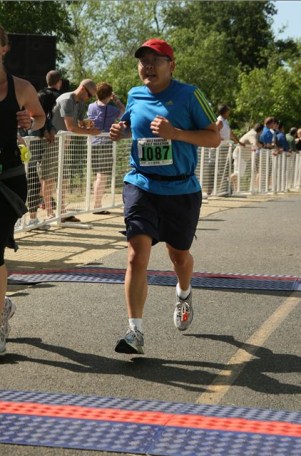
2012 Finish line

My times below are deceptive.  The 2013 race in terms of effort was much more than the 2012 race.  For the 2013 hot race I definitely found my mouth parched and there wasn’t enough water on the course that year for me to stay hydrated.  At one point with about 3 miles to go I felt like passing out.  The other downside was the fact they didn’t come up with a new medal from 2012 to 2013.

IMAG3074

2012 chip time: 2:12:50

2013 chip time: 2:13:00

-StewsCat


Mid-year run update

As we approach the middle of the 2016, I wanted to look back at the first 6 months of the year.  My run goals this year were fairly simple.

  1. Stay injury free
  2. Hit 70 miles each month

These are fairly modest goals, but given the last few years of running I thought it was time to take a step back and see if I can stay overall healthy.  I’ve had a long bout of injuries each of the previous years that has sidelined me from running entirely or severely limited by activity level.

So far this year I’ve been running injury free *knocks on wood*.  I have had a few aches and pains here, but nothing really to stop me from running and cause lasting pain.  In years past I’ve done at least a handful (3-5) races and this year I said to myself that I’d concentrate on just running healthy.  I am signed up for a half marathon later this year and then a full marathon in February of next year.  One thing that I like about not having any imminent races is that I can take a rest day if I feel like my body needs it.  I’ve had a few occasions where I’ll think about running but my body tells me that I should rest, so I take a day and then I’m back at it the next day.

I’ve hit my goal of 70 miles each month.  In previous years I have had goals such as hitting 50 miles a month and felt that was tough.  Somehow this year 70 actually isn’t too terrible.  I’ve done it even when I lose multiple days where I’d normally run during that month.  I’m already at 440+ miles so far.  If I can continue with this streak of injury-free running, then I’ll have hit a new PR for miles per year.

So far I’m proud of what I’ve done thus far.  Just need to keep it on up.  I’ll leave you with a funny pic of the cat. 🙂

IMAG4278.jpg

-StewsCat

Homemade pancakes – Sourdough discard

Homemade pancakes – Sourdough discard

Hello!  Quick little post from this morning’s breakfast

This morning I did an impromptu homemade pancakes since I had to feed my sourdough starter and didn’t want to just toss the extra sourdough starter in the trash.  I have kept my starter in a small mason jar in the fridge.  Everything I read says you should feed your starter that is stored in a refrigerator about once a week.  You can technically let it go longer, you just have to revive it later when you’re ready to start cooking again.

IMAG2973
Sourdough starter out of fridge

I procured about 1/2 of the above volume (~1/3 cup) and mixed it with the below pancake recipe I found online.

Pancake recipe:

  • 1.5 cups AP flour
  • 3.5 tsp. baking powder
  • 1 tsp salt
  • 1 Tbsp sugar
  • 1 1/4 cups rice milk
  • 1 egg
  • 3 Tbsp melted butter

I mixed up the sourdough starter discard with the dry ingredients (flour, baking powder, salt, sugar) and combined it with the moist ingredients (milk, egg, butter).  Using a whisk, I mixed it until I had a nice pancake batter.

I then used a ladle to make pancakes on my cast iron pan.

It’s been a really long time since I’ve made pancakes but I remembered something about waiting until there were a good amount of bubbles in the center of the pancake before needing to turn.  I wasn’t sure how long to cook after turning since there would be no more bubbles to watch.  I kind of winged it and noted it took about another 1.5-2 minutes after the first flip.

IMAG2981

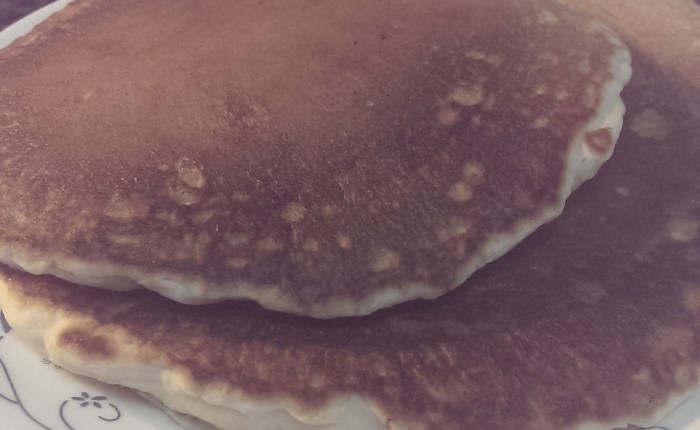
Overall they came out well.  Glad I was able to use the sourdough discard.  I had mine with maple syrup and the wife had hers with maple syrup and blueberries.  Will have to consider other recipes for the sourdough discard (biscuits, crackers, etc).

In other news, I made it out for 7 and a quarter miles this morning.  It’s been warm here and will only get hotter next week.  Surprisingly even though I didn’t go out too early, it still wasn’t too hot for a long run.  I also managed to do some good stairs (there’s a parking structure at the nearby school that is about 5 stories with an outdoor staircase).

-StewsCat

Urban Cow Half Marathon Race Recap (2014, 2013, 2012)

Urban Cow Half Marathon Race Recap (2014, 2013, 2012)

The Urban Cow Half Marathon is one of my hometown races.  It started out as the Sacramento Marathon a long time ago, then became the Cowtown marathon.  In its third iteration, the race was renamed the Urban Cow Half Marathon.  However, they dropped the full marathon distance when it was renamed and now offer a half marathon and 5K Run/Walk option.

Packet pickup is at the local Fleet Feet store in midtown Sacramento.  I like local races because the packet pickup process is usually fairly quick.  It helps that they have two days of packet pick ups (Friday and Saturday) before the race.  This is a non frills pickup and isn’t an expo by any nature.  Usually you go in and pick up your bib, t-shirt, and sometimes a small bag (not actual swag usually, just flyers for other races and products).  One year they had perks for people who signed up early (first so many runners) and in addition to the shirt, you received a handheld water bottle with the urban cow logo on it.

In the 3 years I ran the race, the course remained about the same.  The start and finish line are in Land Park (a large well-known park south of downtown Sacramento).  This is a nice start/finish area since there is plenty of room to have all the fun things for a race (lots of booths, tents, and beer garden at the finish).  Parking is also not terribly bad as you can park around the park and there are neighborhoods nearby that allow free street parking.

The first mile+ of the race courses through the park and then you head north into the neighborhoods.  These streets are lined with a variety of houses from the early 1900s to mid-century modern to more contemporary houses.  Typically the race is run the first weekend of October, which is great weather here in Sacramento.  It starts in the 40s or 50s and does warm up but not too terribly by the time the race is done.  After heading north through the neighborhoods we moved into a more industrial area of Sacramento just south of downtown.  You pass by the big Blue Diamonds almond plant as well as the Front street animal shelter.  After this we found ourselves in downtown Sacramento between the “sky scrapers” (aka taller buildings of the city – not really sky scrapers).  We run just west of the Capitol building so you get a nice view of it around 5.5 miles into the race.  Finally the turnaround takes place in Old Sacramento.

I feel like all somewhat big cities have an “old” part of their city.  Usually its very touristy and has some kitschy stores.  Sacramento is no different and has a bit of a Western theme.   There are some nice restaurants in this area and it also sits right on the Sacramento river.
We then continue south along the Sacramento river, passing by the famous Tower Bridge.  From miles 6 to 11, the course runs on a bike river trail along the Sacramento river.  This is a nice change of pace from running in city streets except if there are a lot of runners can get congested because the bike trail is fairly narrow.  Eventually at mile 11 we make our way back to regular streets and head north and then east back towards Land Park.  The last mile of the race is run through the park and that’s when you know you’re close.

I like the finish line because there’s always a large crowd of people cheering and they announce names of people as they reach the end.  The finish line refreshments are usually good – bottled water, chocolate milk, bananas, bagels.  The big perk is that all participants over 21 receive a free beer from a local microbrew.  When I ran the races, it was Lockdown Brewery from Folsom, CA.  Another unique part of this race is that the finisher’s medal is a cowbell.  Each year it is a different color.

Overall I like this race because of a few things:

  • Good weather – usually, global warming may change this though
  • Relatively flat course – the course is almost entirely flat except for a few areas where you have to climb short hills (in the city).
  • Good crowd support and course support
  • Easy packet pickup
  • Free parking
  • Free beer!!

I’m registered to run this race again this year after taking last year off.

IMAG2972

-StewsCat

Sourdough boule – with homemade starter

Sourdough boule – with homemade starter

I don’t know if I’ll ever get around to posting about making my own sourdough starter but this week’s bake involved using that homemade starter.  Using starter from the fridge does require a bit of advanced preparation as you need to “wake” your starter up and get it up to snuff to bake with.  On Thursday I pulled my sourdough starter out of the fridge (it had been in there for about a week).  I split it in half, fed one half and let the yeast eat for awhile (i.e. get some bubbles going) and then replaced that back in the fridge.  The other half I removed half of the starter and then fed it with 1/4 cup water and just under 1/2 cup of flour.  Previously I had been feeding the starter based on weights but decided for this week’s bake I would switch to using volume because it is much quicker using a measuring cup instead of getting the scale out.  I continued feeding the starter around every 12 hours for the next 3 days until I had an active bubbly starter.

Sunday morning I fed the starter one more time then waited about 4 hours (I read that is when the starter is most active).  I  haven’t used the sourdough starter by itself as the only source of yeast so was interested to see how this would turn out.  My recipe was as follows:

  • Sourdough starter (199 g)
  • Bread flour (500 g)
  • Water (360 g)
  • Salt (10 g)

I deliberately kept this recipe simple as I wanted to see how much sourdough flavor I could get from the starter.  I mixed all of the above together into a wet mess, let it auto-lyse for 30 minutes and then did the slap and fold method for about 15 minutes.  This dough was placed in a clean bowl and allowed to bulk ferment for about 1-1.25 hours.  I was pleasantly surprised to see that the dough had increased by 1.5-2 x it original size.

I proceeded with 3 stretch and folds (envelope style) separated by around 30 minutes each.  I could feel the dough coming together nicely.  After the last stretch and fold, I bench rested the dough for 5 minutes, then shaped it creating a nicely tensioned surface.  I used a well floured towel in a collander and put the dough in there to proof for the final time.  Since I made pizza, the kitchen was warm and after about 40 minutes the dough had proofed to the proper amount.  Instead of using a pre-heated dutch oven I free baked the dough on my pizza stone (steel) using some parchment paper to do the transfer.  I misted the inside of the oven and baked the bread at 500 F for 10 minutes, then dropped it to 475 for another 10-15 minutes or so.  When I saw how much oven spring was present, I realized I hadn’t de-gassed the dough enough during my stretch and folds and forming.  Oops!  Oh well.

You can see the impossibly large air holes in the dough, which makes it hard to use as a sandwich.  The great thing about the bread was that it had that characteristic smell of a sourdough loaf.

Overall this bake was more to see how my sourdough starter would function.  I’m happy with the amount of yeast activity present in the starter and also that it does impart some flavor as well.  It’s quite amazing that this starter was created using just water and flour.  The natural bacteria and yeast from the flour and the environment create this living, breathing organism that can be used to bake bread.  Pretty neat!

Lessons for next time: de-gas the dough properly.

-StewsCat