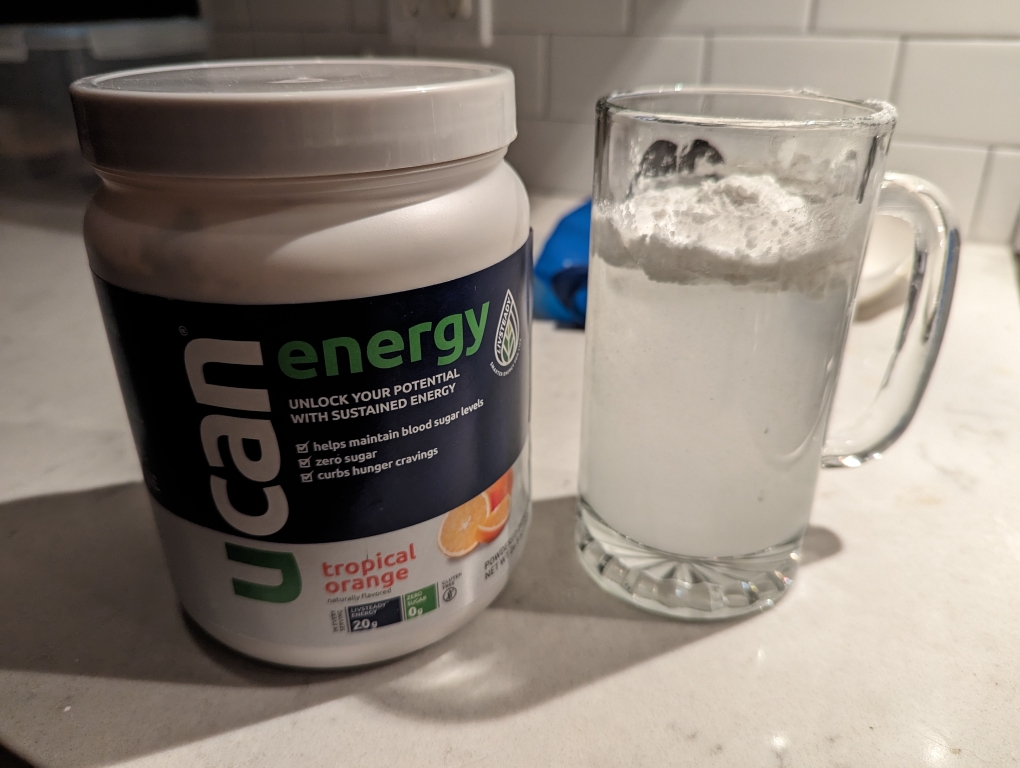
Something else I also focused on more this time around was my nutrition. I know that in previous races I was not taking in nearly enough carbohydrates during my marathons, which I suspect played a role in my hitting the wall badly on previous races. For half marathons I can get away with minimal nutrition (I’ve done them without any in-race fueling but often would take maybe 2-3 gels). Throughout my time running I’ve used a few different types of gels, mostly Gu with some Clif gel/blocks and Honey Stinger sprinkled in. This time around I elected to try some new things: Maurten, UCAN, Skratch. I found the Skratch chews seemed to give me some upset GI so discontinued those. Initially I thought the Maurten was a bit too sweet but then I became more accustomed to it. I tried both the UCAN endurance drink mix (consistency of corn starch and equal messy) and did try the UCAN energy gels a few times. In the end I stuck with using the UCAN drink mix about 60-90 minutes before my long runs. I also took the Maurten drink mix about 2-3 hours before long runs/race day. For my electrolyte replacement, I’ve used Nuun for a number of years and fortuitously found out that they also used Nuun on the CIM course. I did get some LMNT but thought maybe it had too much sodium for my needs. In hindsight, I probably should have used that as I think I was at an electrolyte deficit for the race. It was hotter than I anticipated and I sweated more salt than I think I thought.
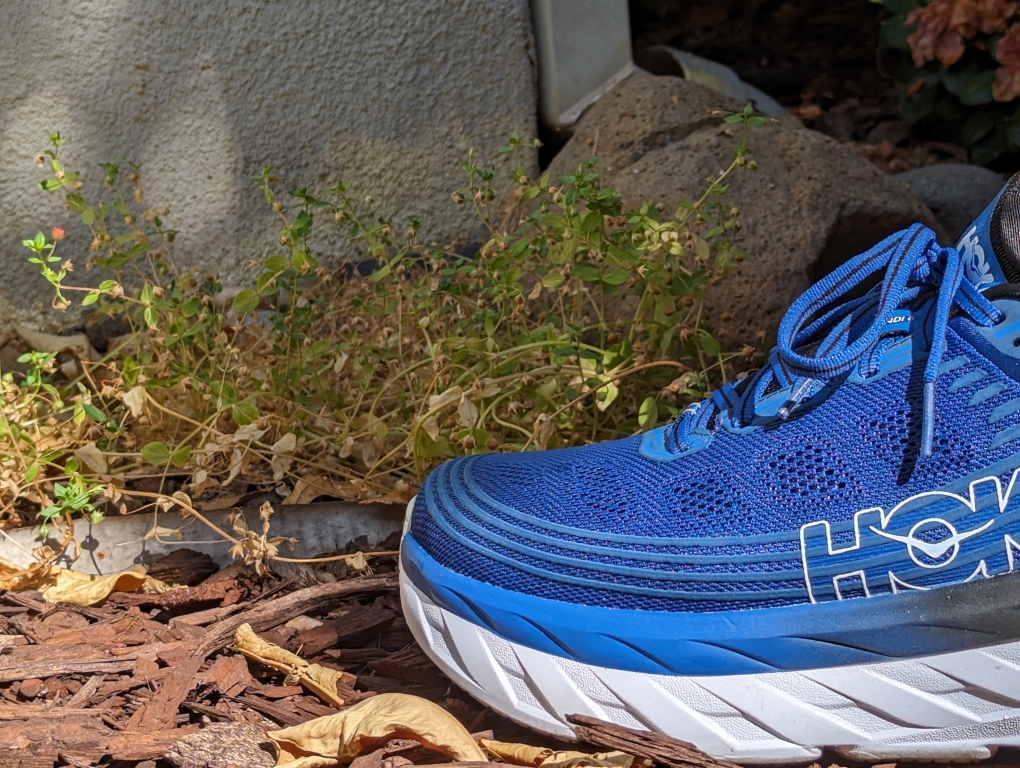
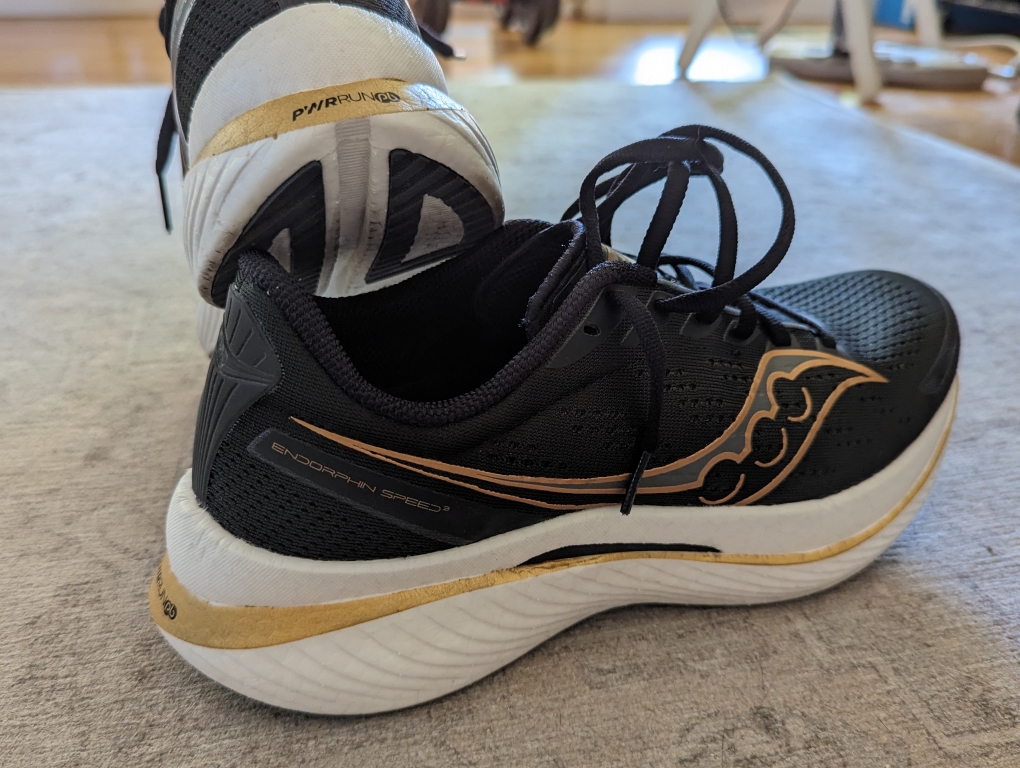
I also decided to get some training and race specific shoes. I am grateful that I am able to afford to do that. I picked up the Hoka Bondi 6 for my long runs, the Saucony Endorphin Speed 3 for some tempo work and the Saucony Endorphin Pro 3 for my racing shoes. Along with those, I did use some Saucony Omni Iso and Hoka Arahi 4 as my treadmill shoes. I really liked the Hoka Bondi for my long runs. I know the Bondis are also a favorite of just general walking and running.

Several years ago I started reading about the Run-walk method for endurance racing. I know that Jeff Galloway is a big proponent of this. I experimented with this in multiple half marathons. At that time I would take a one-minute walk break after each mile. I found that I was able to maintain a comparable pace to when I would run the entire half marathon. I also felt as if my legs felt fresher at the end and I did not have as much DOMS in the days after the race. I did incorporate the run-walk in my last full marathon (Big Sur Marathon) but also went with the one minute walk after each mile. For whatever reason I didn’t discover that my Garmin could be set to buzz to let me know when to run and when to walk. I could set intervals for # of minutes of running and then # of minutes of walking. During this training cycle on my long runs I experimented with different run/walk intervals and eventually settled on 5 min run:45 second walk. I think that seemed to work out during the race.
I also focused on slowing way down for my easy runs compared to how I used to run/train. Like many others, I think my effort was much too hard/fast for “easy” for my pace and so I wasn’t benefiting aerobically and endurance-wise. One of my running friends helped me determine my various HR zones so I focused on doing my easy runs in HR Zone 2 (for me this is about 139-148 bpm). I also tried to incorporate some tempo and interval runs.
I had a few small injuries during this training block. During week 2 I started to get some left foot pain on the dorsal aspect of my foot. During week 11 we took a weeklong trip to NYC so missed out on a couple of runs. Finally during week 14 I had some more left foot pain (this time in middle/bottom of the foot). Both during week 2 and 14 I took some time off and also took it easier on the runs I did and happy to say it didn’t cause any long term issues and was fine during the race.
This training block I also started using a hydration vest during my long runs. I used the Ultimate Direction Marathon Vest V2. This is a pretty minimal vest but had enough pockets up front for 2 soft 500 ml flasks along with enough pockets for gels. The back pocket is smaller profile compared to some of the larger packs which is good for me since I tend to sweat a lot. It can hold a 2L water bladder if needed.

Things I’d like to improve on for next time:
- More strength training
- More discipline with speed workouts
- More practice with hydration/electrolyte replacement
16 week training summary
Total runs: 57
Total miles: 400.03
Total time: 4424.28 minutes (73 hours and 44 minutes)
I was happy with this training block though in that my body felt good overall and I achieved an 8 minute PR on my previous best marathon time. I also recovered well post-race and soreness lasted from Monday to about Thursday. I did wait about 10 days before attempting any sore of running. The weekend after the race we were by the coast and did walking and no problems/soreness noted.
Marathon recap here.
-StewsCat
 StewsCat